A design problem, not a learner problem
A companion to Chapter 1 of the book, The Learning Problem. The same ideas in several forms: film, conversation, 2 infographics, a mind map and 6 activities. Start with whichever suits you.

Chapter 1 in two minutes
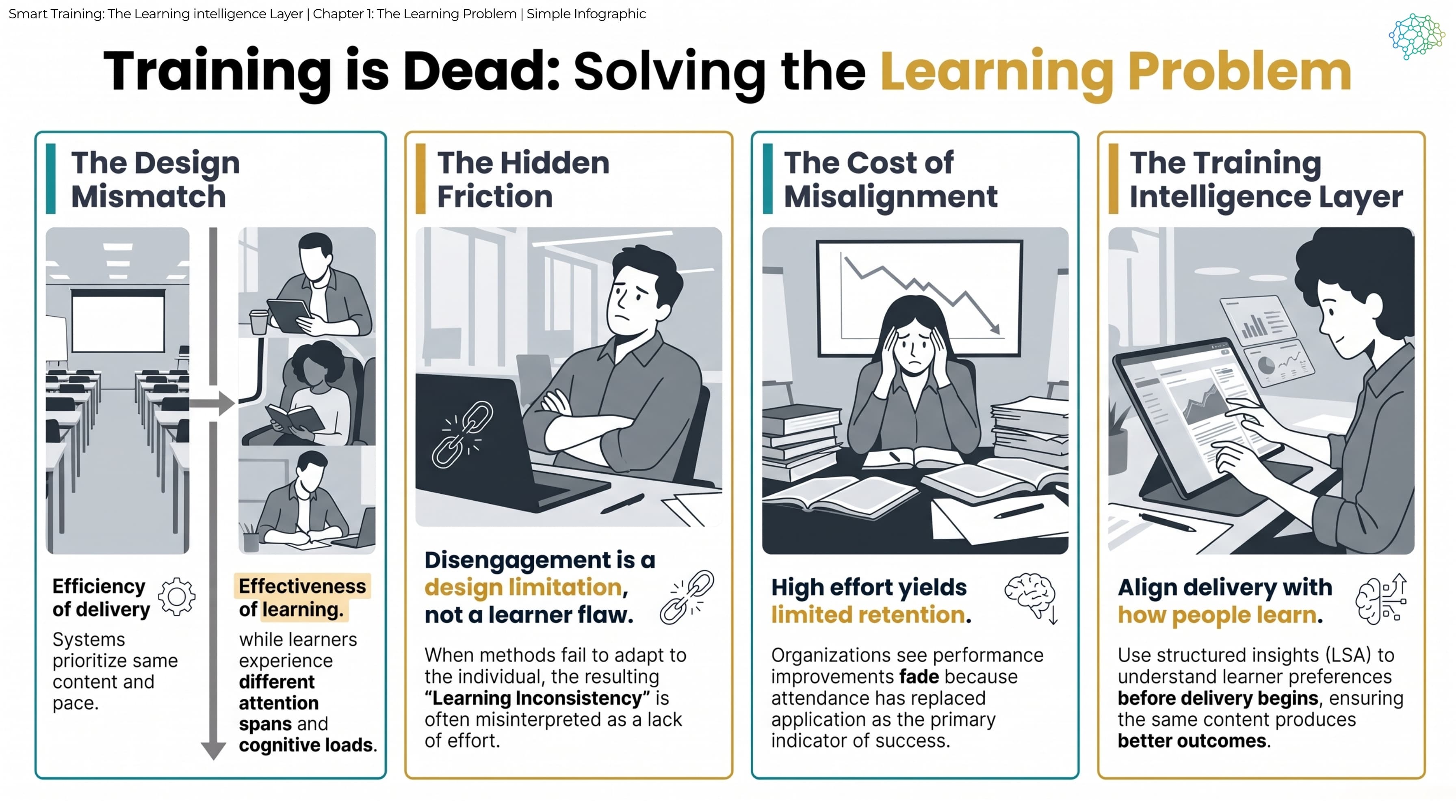
Organisations invest heavily in training and see little lasting change in behaviour. Chapter 1 argues the cause is structural. Systems are designed for efficient delivery, with the same content, the same pace and the same assessment for everyone.
Learners experience something different. Attention, working memory and prior knowledge vary across a room, so the same session produces very different results. That inconsistency is often read as a lack of effort, when it is a limitation of the design.
It is also a question of inclusion. One-size-fits-all methods suit some people and make others work disproportionately hard. The chapter's answer is a missing layer of insight: understanding a group's preferences before the session, so delivery can be aligned to the people in it.
Disengagement is a design limitation, not a learner flaw.
Watch or listen
Prefer to take it in by eye or by ear? Both cover the core ideas of Chapter 1 in a few minutes.
Film, 2 min
Why standardised training fails
Why attendance is a poor stand-in for learning, and why the same content and pace leaves part of every room behind. Captions are built in.
Conversation, 6 min
Why standardised training fails you
A conversation about the gap between what training delivers and what learners actually experience.
Chapter 1 at a glance
A quick overview, then the full argument with the evidence. Select either one to see it full size.
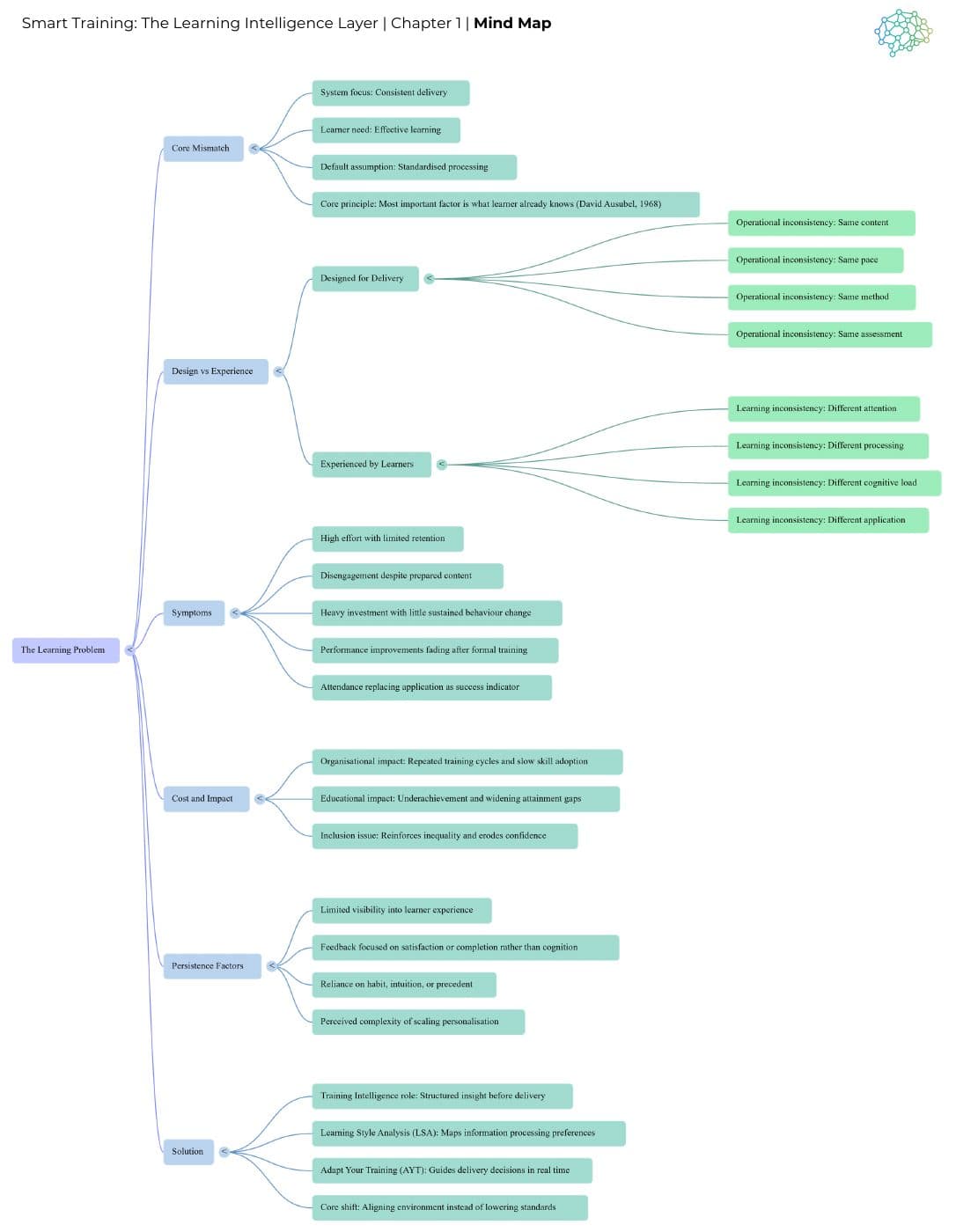
How the ideas connect
Every idea in Chapter 1 on one page. Look at it before you read to see the shape of the argument, or afterwards as a recap.
Put it into practice
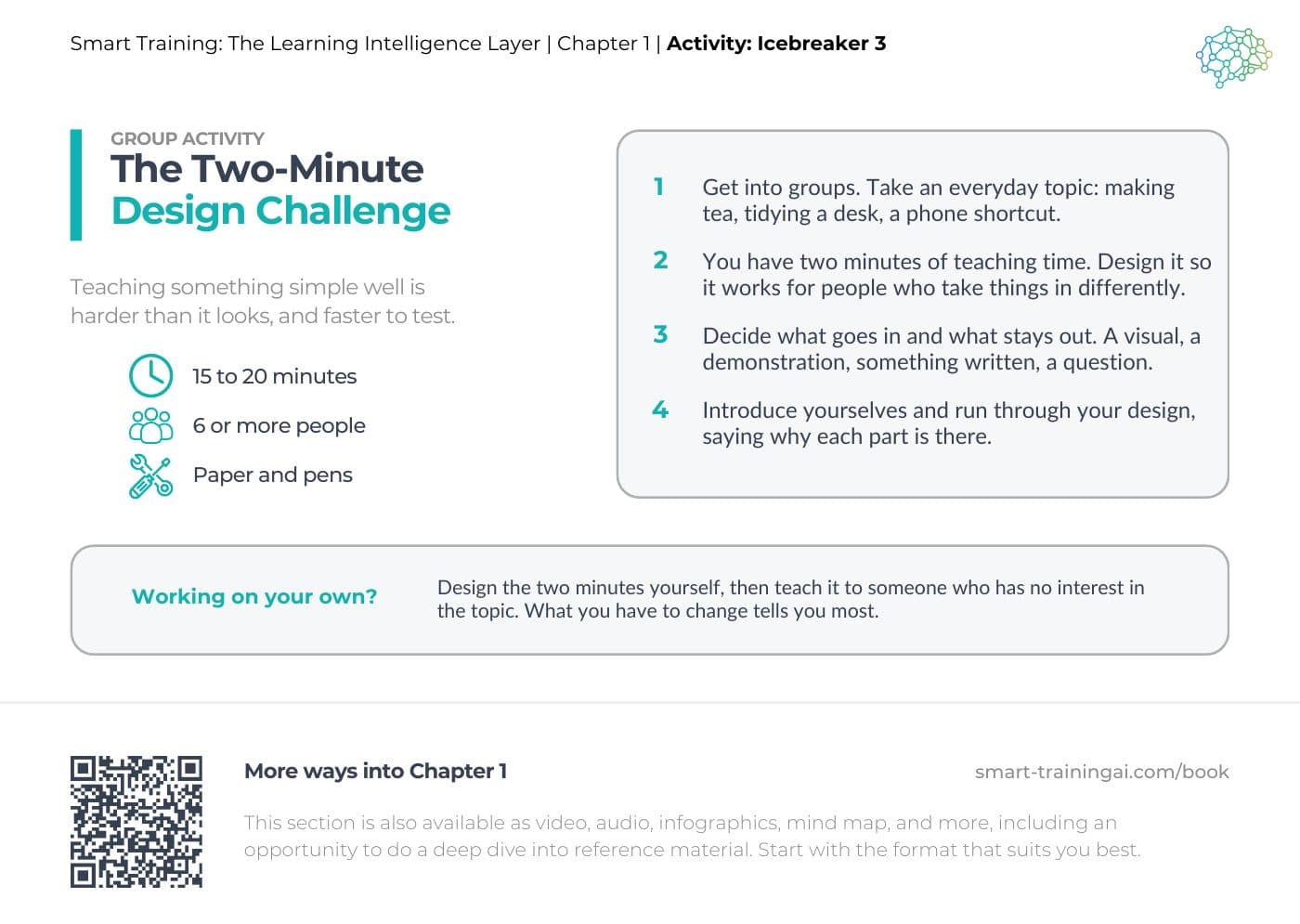
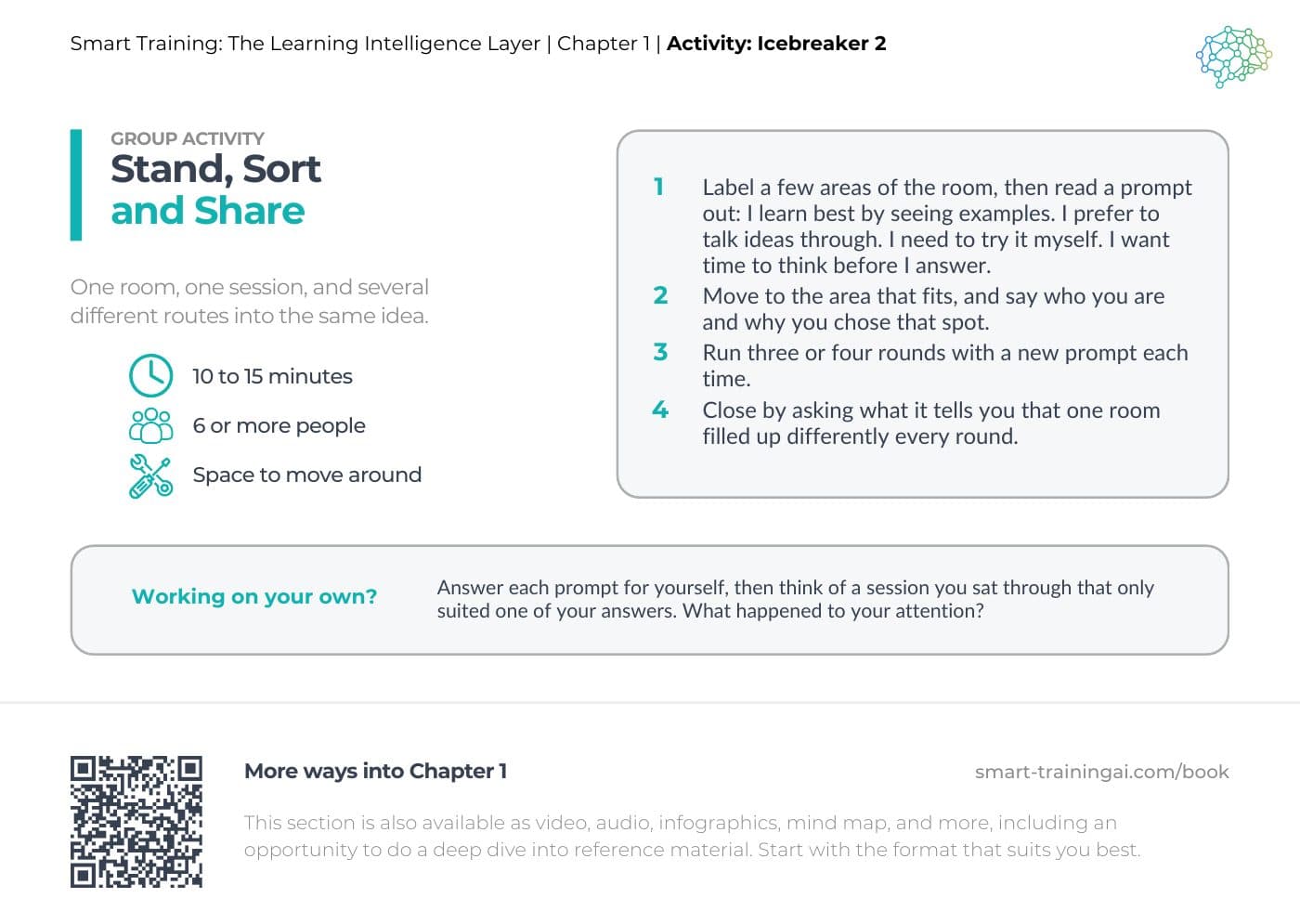
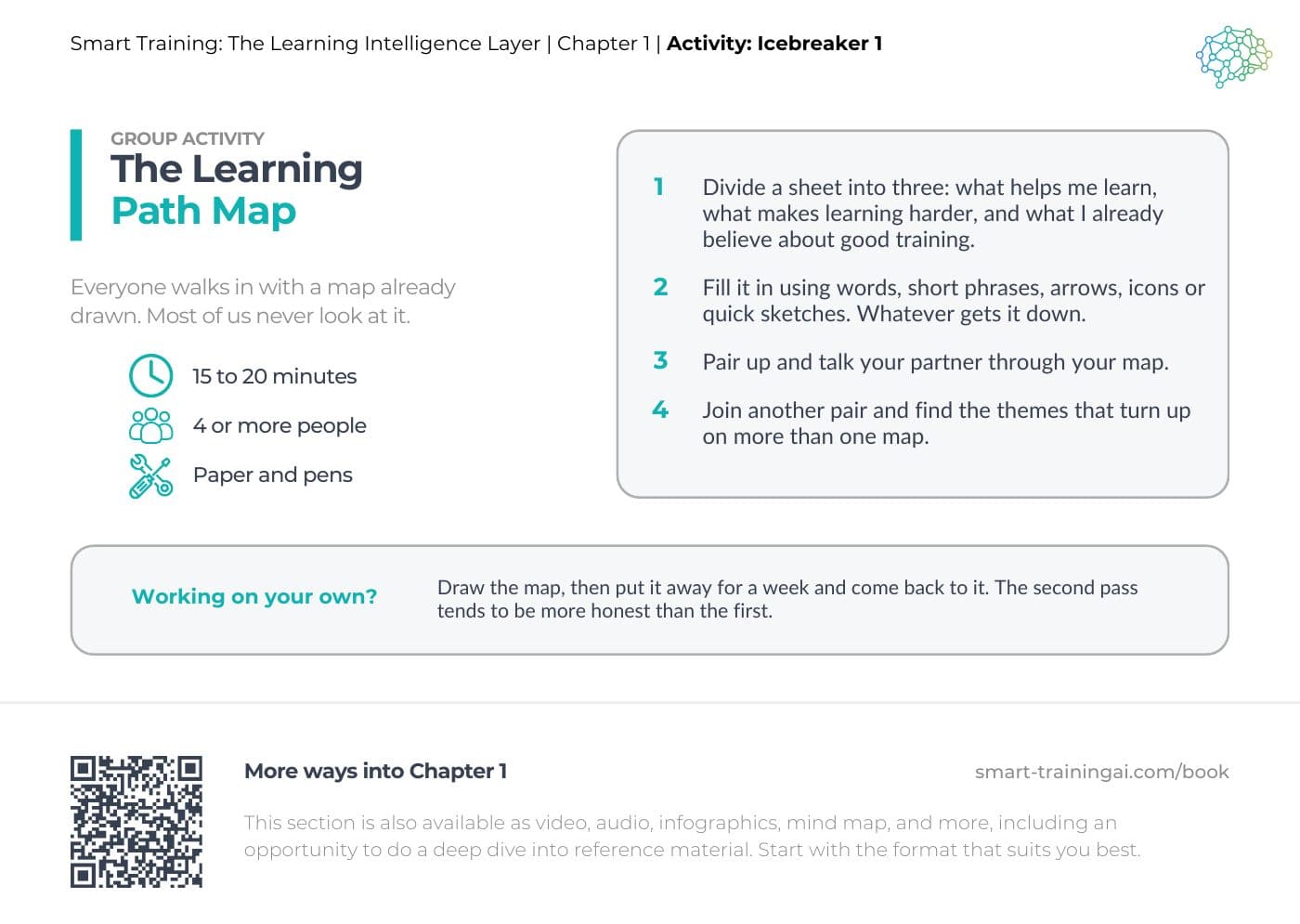
Short activities to run with a group or work through on your own. Each one has a printable card.
With a group (3)
On your own (3)
Go deeper
The research and writing behind Chapter 1.
- David Ausubel, Internet ArchiveEducational Psychology: A Cognitive ViewThe source of the idea that what a learner already knows is the biggest single influence on what they learn next.
- Sweller, Ayres and Kalyuga, SpringerCognitive Load TheoryHow the limits of working memory shape what good instruction looks like.
- RAND CorporationContinued Progress: Promising Evidence on Personalized LearningA large study of schools using personalised learning, and what changed in their results.