From deficit to difference
A companion to Chapter 12 of the book, Neurodiversity and Learning. The same ideas in several forms: film, conversation, 2 infographics, a mind map and 6 activities. Start with whichever suits you.
Chapter 12 in two minutes
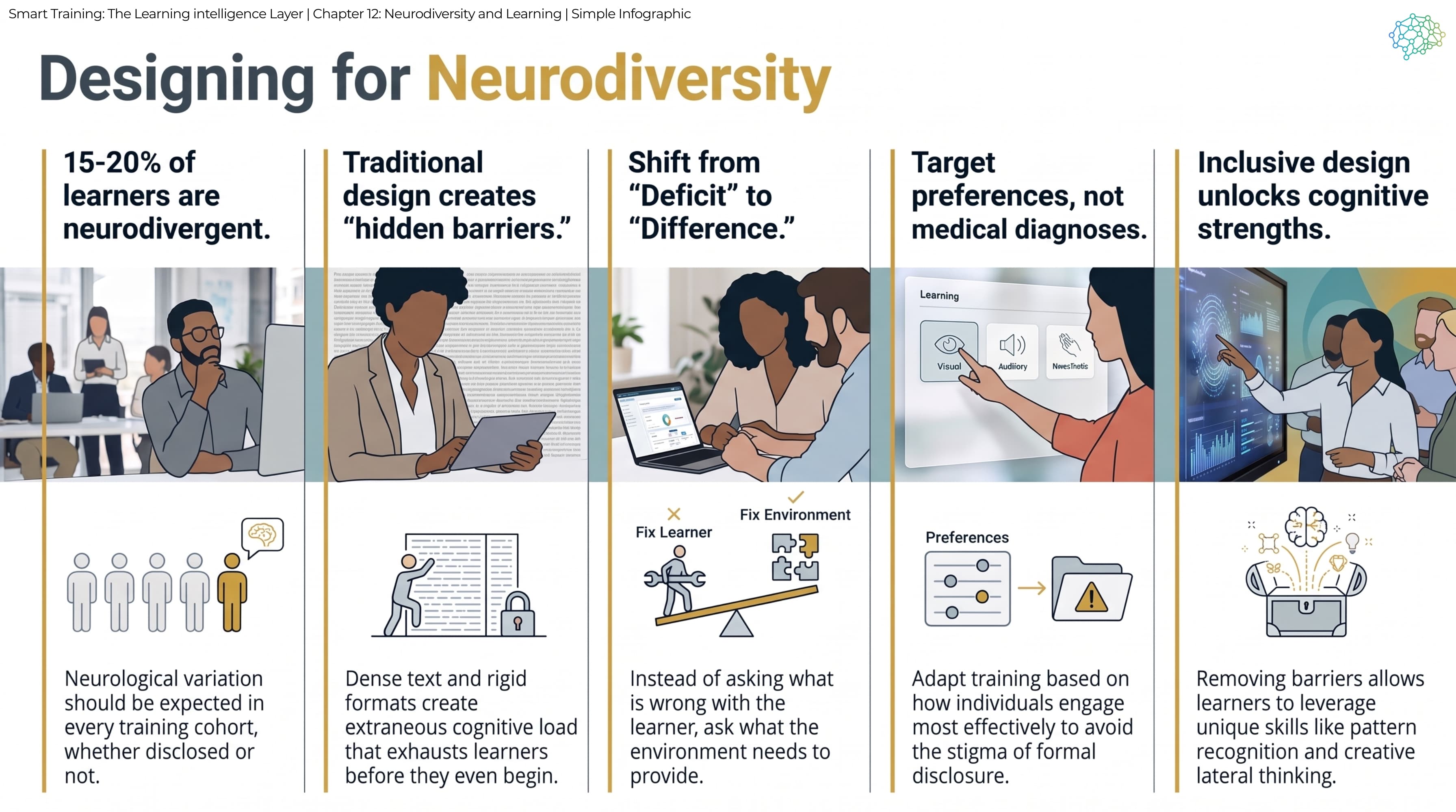
Neurodiversity describes natural variation in how people's brains work, including ADHD, autism, dyslexia and dyspraxia. Chapter 12 puts the figure at 15 to 20 per cent of any group, so variation should be expected in every cohort, whether or not anyone has disclosed it.
Traditional training assumes long verbal explanation, sustained attention, dense text and timed assessment. Those choices add extraneous cognitive load that tires people before learning begins, and design problems are often experienced, quietly, as personal failure. Following Thomas Armstrong, the chapter shifts the question from what is wrong with the learner to what the environment needs to provide.
Universal Design for Learning offers multiple means of representation, engagement and expression for everyone. Working from preferences rather than diagnoses means nobody has to disclose anything to benefit, and avoids stereotyping. The chapter also sets out ethical limits on learner data: use it only to support learning, be transparent, and empower rather than monitor.
Instead of asking what is wrong with the learner, ask what the environment needs to provide.
Watch or listen
Prefer to take it in by eye or by ear? Both cover the core ideas of Chapter 12 in a few minutes.
Film, 1 min
How extraneous cognitive load blocks learning
How dense handouts, unclear instructions and rigid formats use up attention that should go on learning, and what better design removes. Captions are built in.
Conversation, 6 min
Universal design for neurodiverse learners
A conversation about the hidden barriers in conventional training, Universal Design for Learning, and adapting to preferences without asking anyone to disclose a diagnosis.
Chapter 12 at a glance
A quick overview, then the full argument with the evidence. Select either one to see it full size.
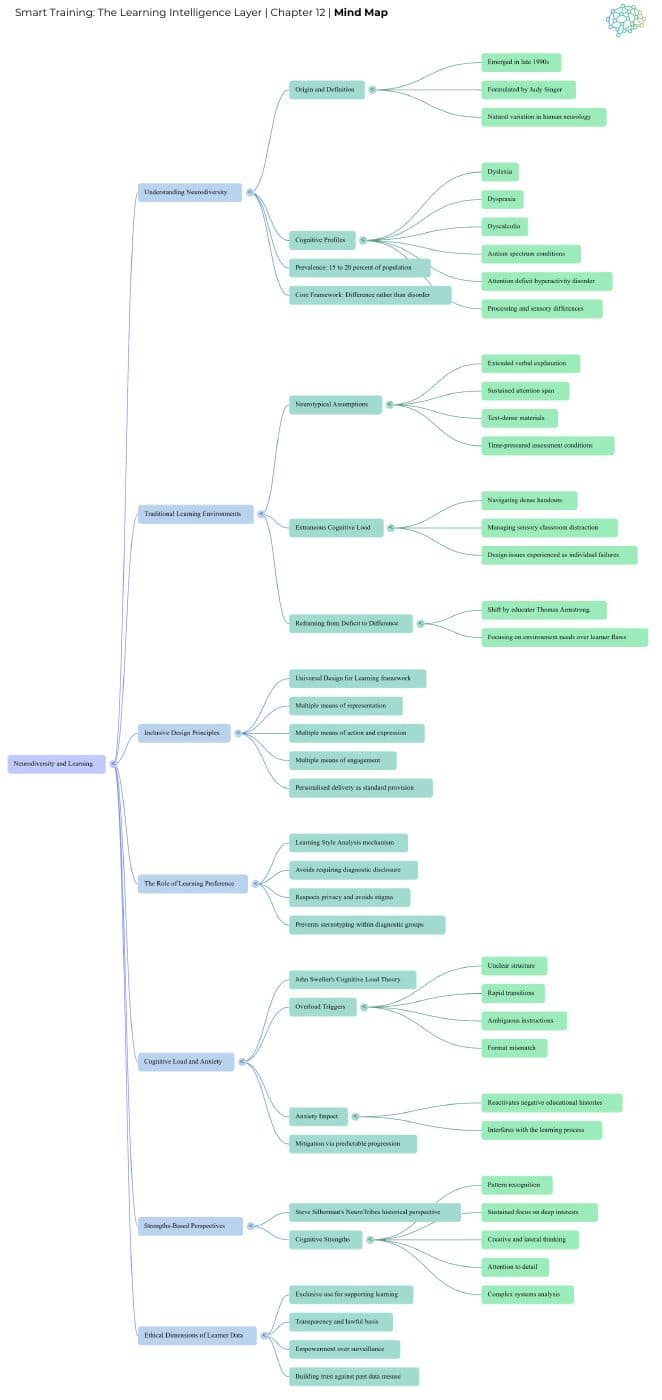
How the ideas connect
Every idea in Chapter 12 on one page. Look at it before you read to see the shape of the argument, or afterwards as a recap.
Put it into practice
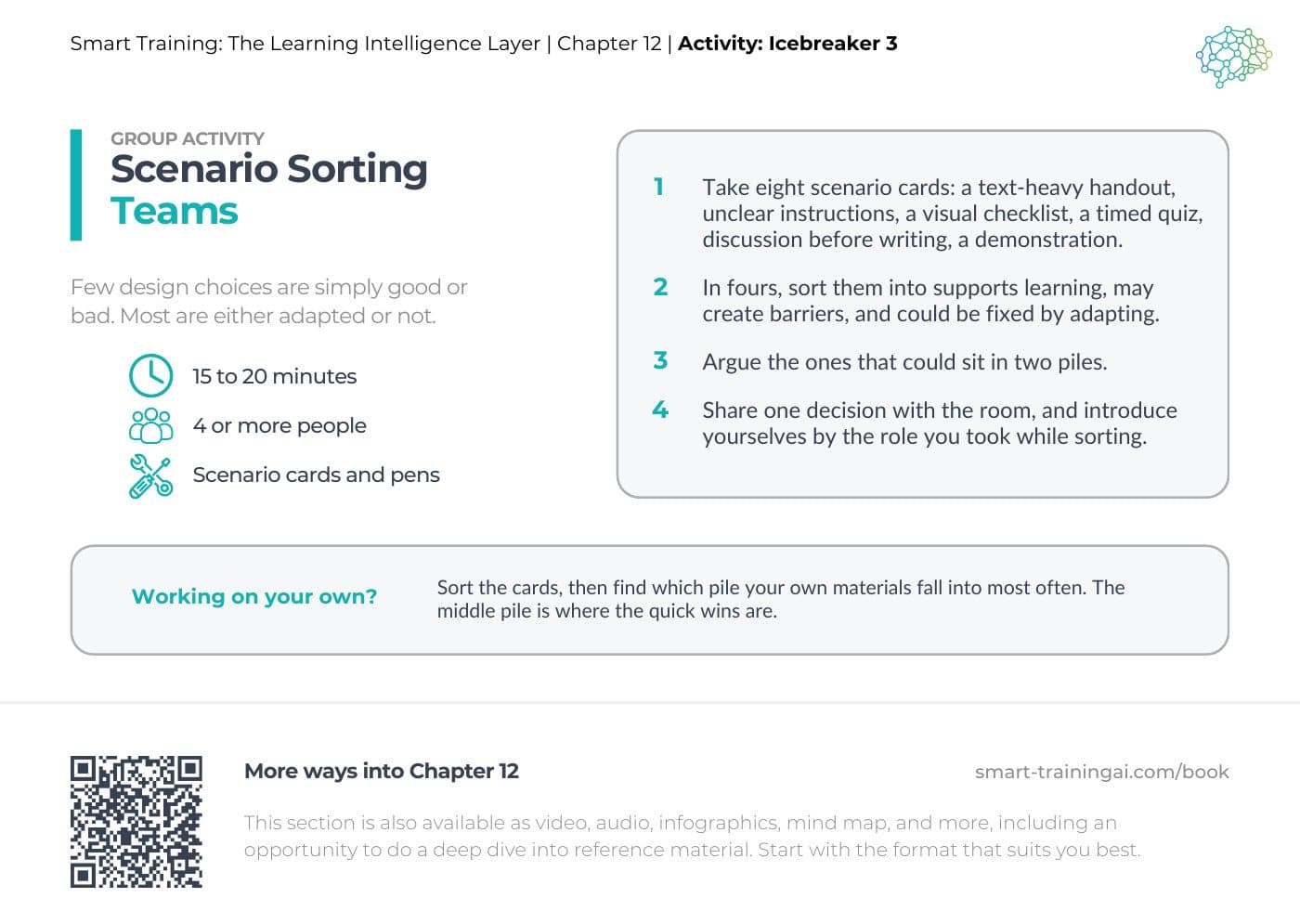
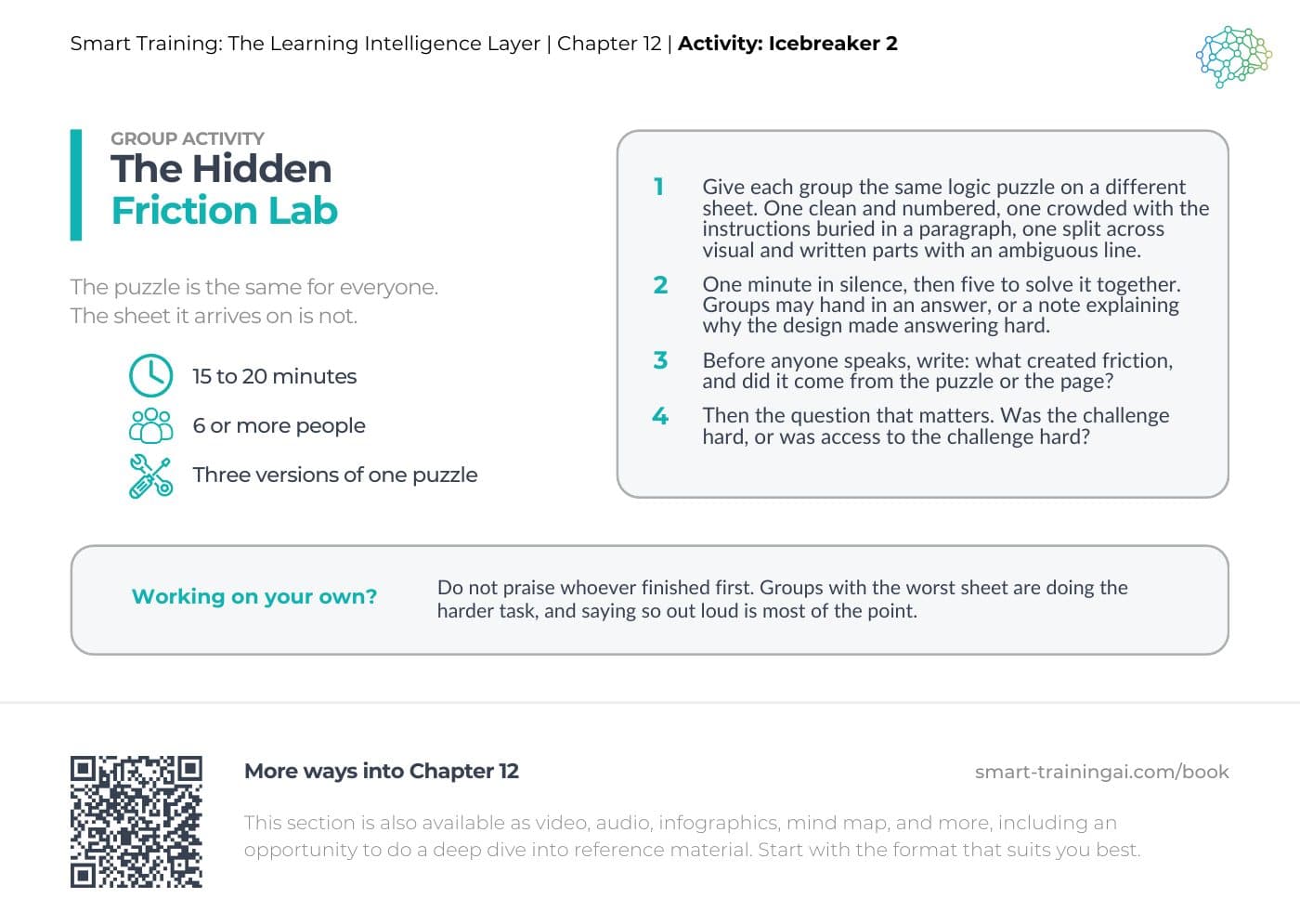
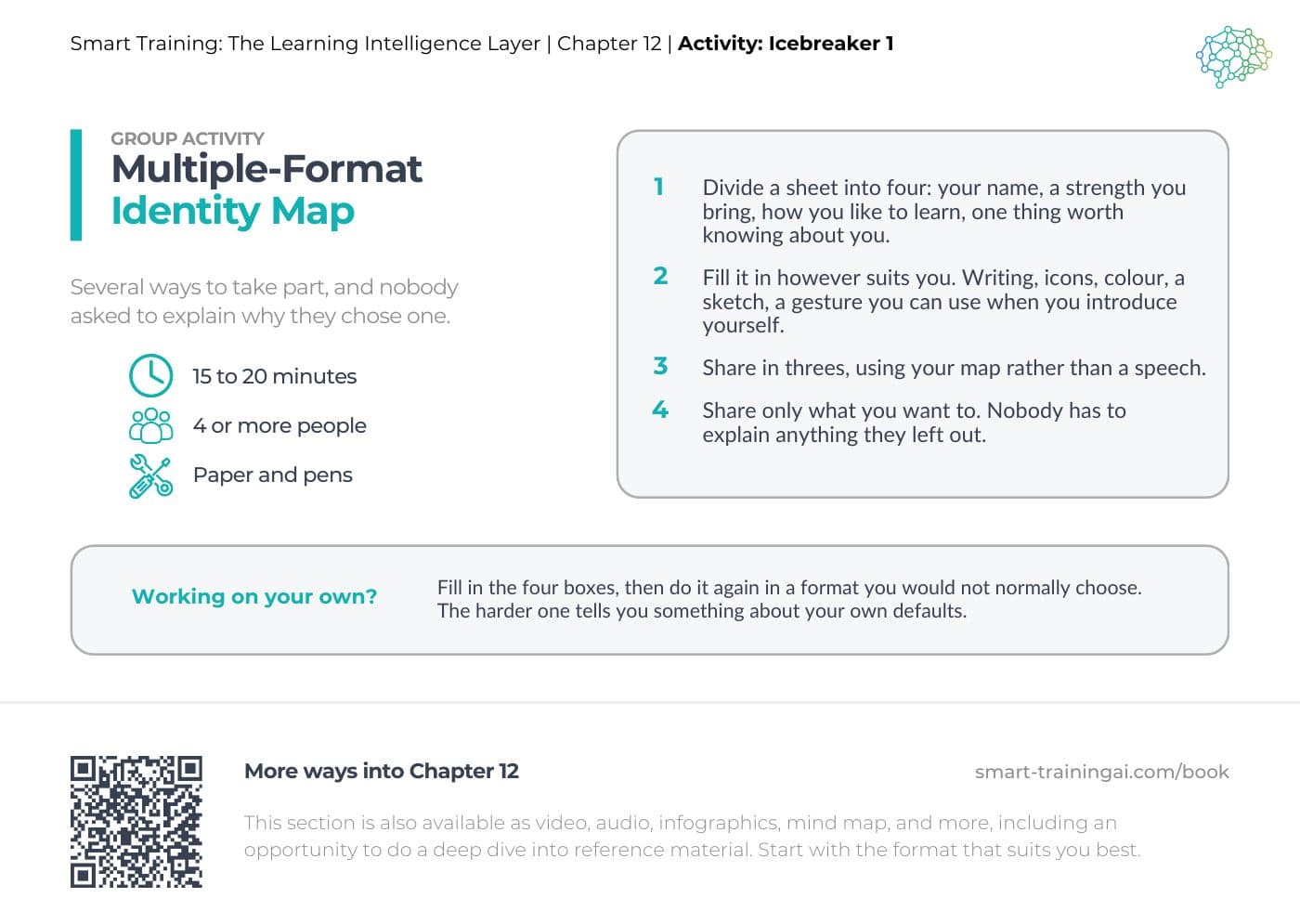
Short activities to run with a group or work through on your own. Each one has a printable card.
With a group (3)
On your own (3)
Go deeper
The research and writing behind Chapter 12.
- CASTUniversal Design for Learning GuidelinesThe framework behind the chapter's multiple means of representation, engagement and expression.
- David Rose and Anne Meyer, Internet ArchiveTeaching Every Student in the Digital AgeThe book that introduced Universal Design for Learning, by its originators at CAST.
- Thomas Armstrong, ASCDNeurodiversity in the ClassroomThe strength-based approach behind the chapter's shift from deficit to difference.
- Steve Silberman, Internet ArchiveNeuroTribesA history of how autism has been understood, and of the neurodiversity movement.
- Nancy Doyle, British Medical Bulletin, 2020Neurodiversity at Work: A Biopsychosocial Model and the Impact on Working AdultsA review of neurodiversity in adult working life, relevant to trainers in the workplace.
- Corker and French (eds), Internet ArchiveDisability DiscourseThe 1999 collection that includes Judy Singer's early essay on neurological diversity.