From me to us to team
A companion to Chapter 13 of the book, Personalised Teamwork Training. The same ideas in several forms: film, conversation, 2 infographics, a mind map and 6 activities. Start with whichever suits you.

Chapter 13 in two minutes
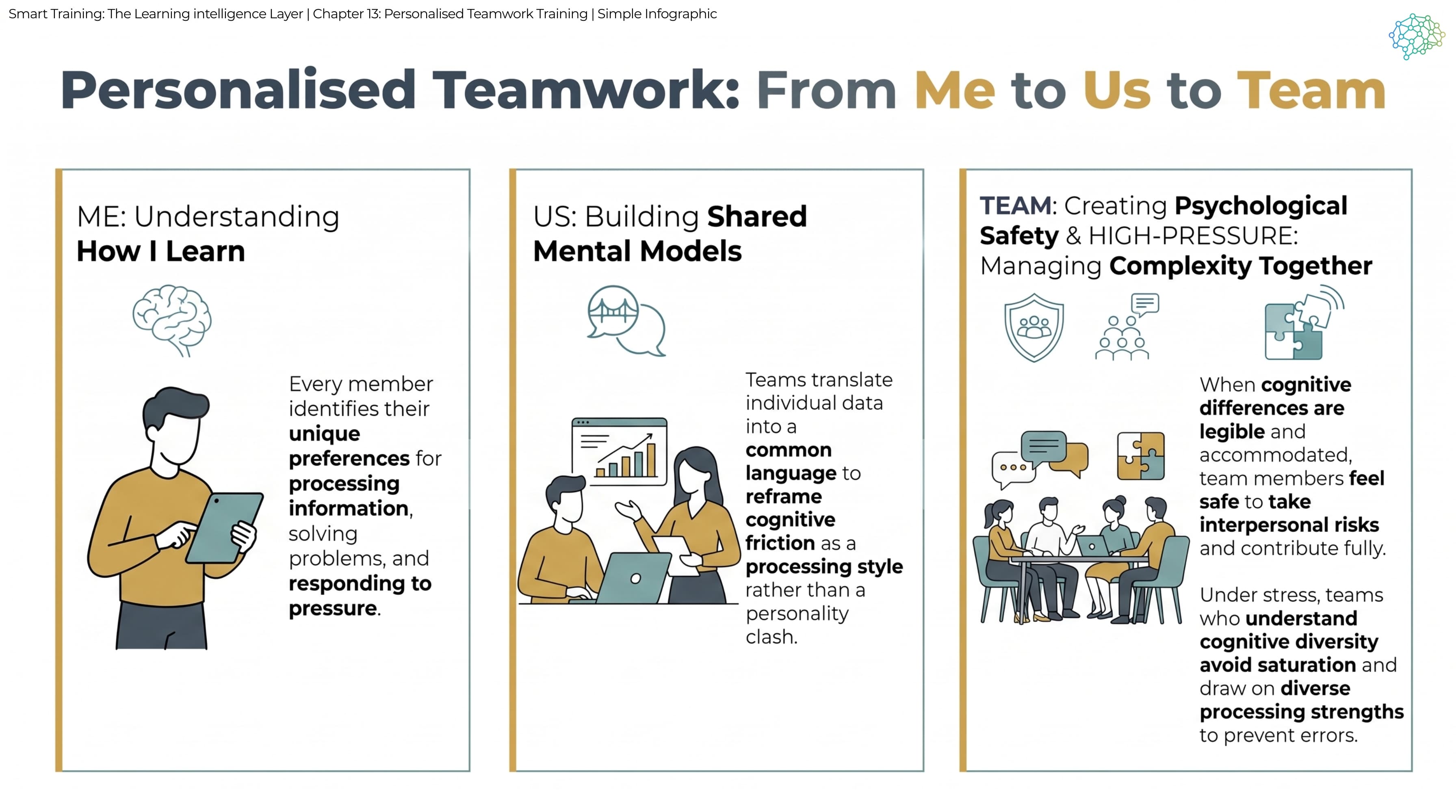
Conventional thinking says shared goals plus technical skill add up to a good team, and friction is a personality clash. Chapter 13 argues that shared goals are necessary but not enough. Much friction comes from cognitive mismatch: people who prefer to process information, solve problems and respond to pressure in different ways.
The chapter moves in three steps. Each person first understands their own preferences. The team then builds a shared picture of how its members prefer to learn and work, giving it a common language that treats friction as a difference in process rather than a character flaw. Mutual understanding follows.
When differences are legible, people feel safer to speak, and a colleague's silence can be read as reflection time. Meetings can be designed to balance quick verbal input with space to think. Under pressure, teams that know their limits are less likely to disengage, and practice in lower-stakes settings helps before it matters.
Shared goals are necessary but not sufficient.
Watch or listen
Prefer to take it in by eye or by ear? Both cover the core ideas of Chapter 13 in a few minutes.
Film, 1 min
Why team friction is a cognitive mismatch
Why capable teams with clear goals still clash, and how understanding each other's preferences changes how that friction is read. Captions are built in.
Conversation, 5 min
How cognitive mismatch destroys great teams
A conversation about psychological safety, shared mental models and designing meetings so that every member can contribute.
Chapter 13 at a glance
A quick overview, then the full argument with the evidence. Select either one to see it full size.
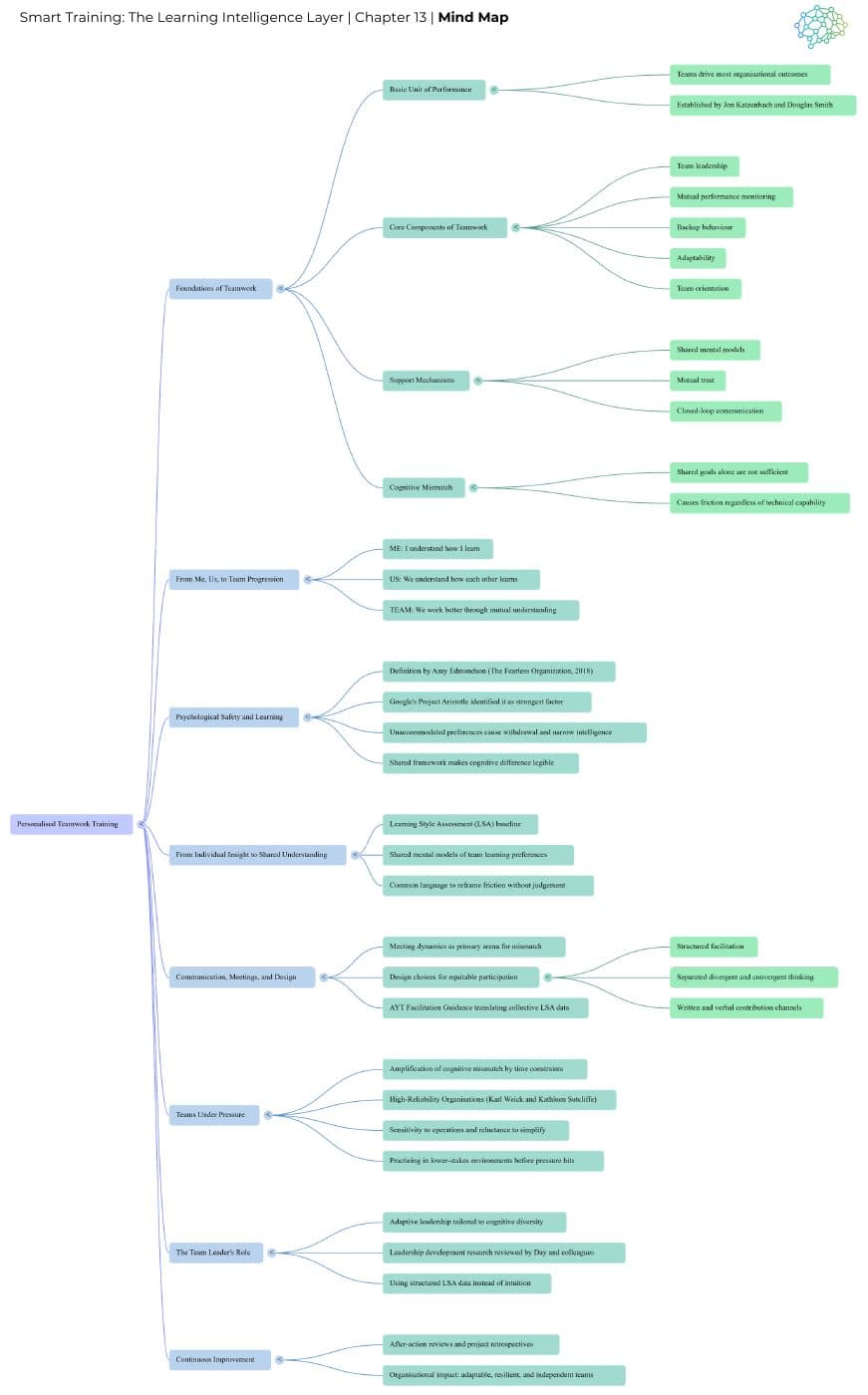
How the ideas connect
Every idea in Chapter 13 on one page. Look at it before you read to see the shape of the argument, or afterwards as a recap.
Put it into practice
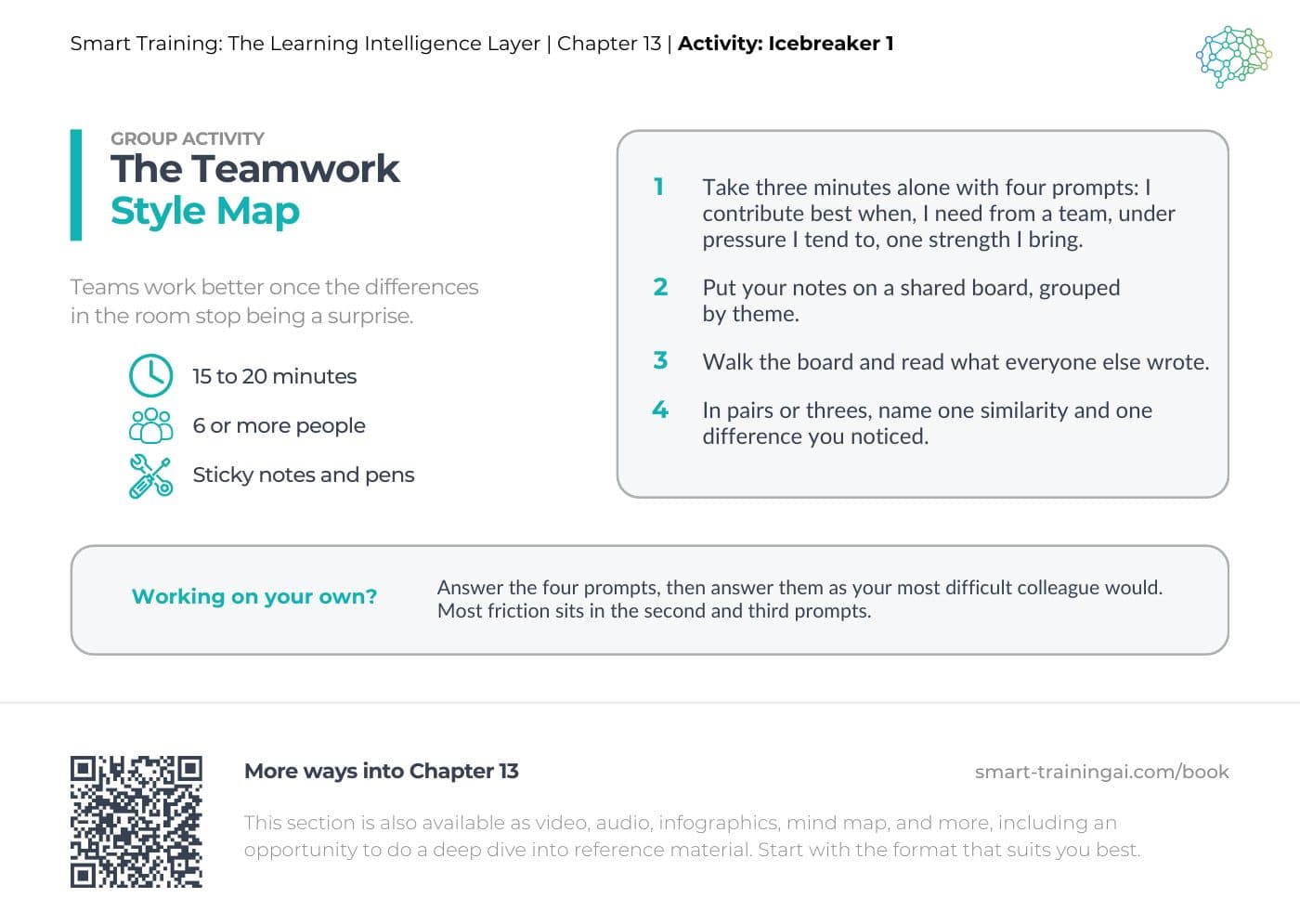
Short activities to run with a group or work through on your own. Each one has a printable card.
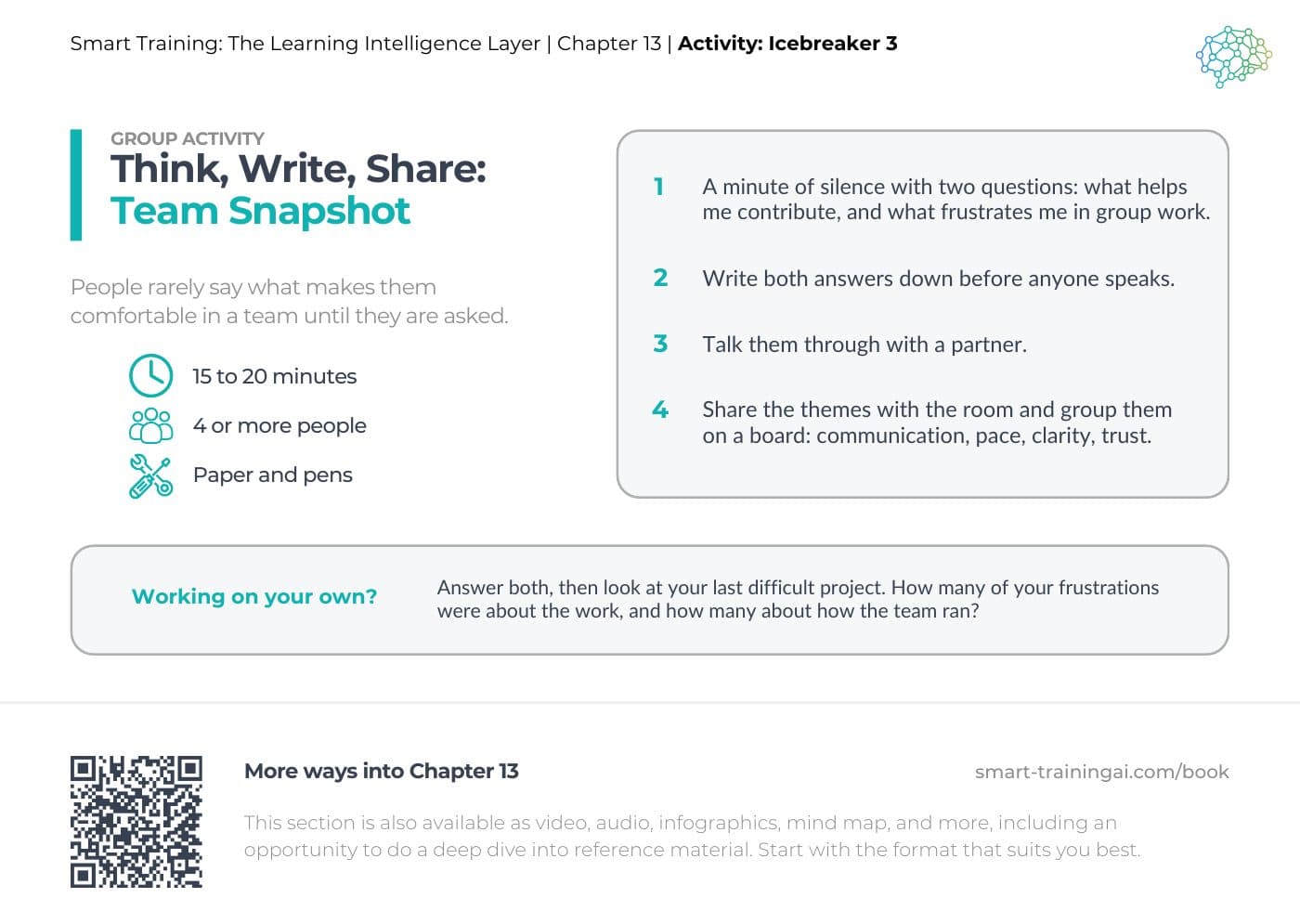
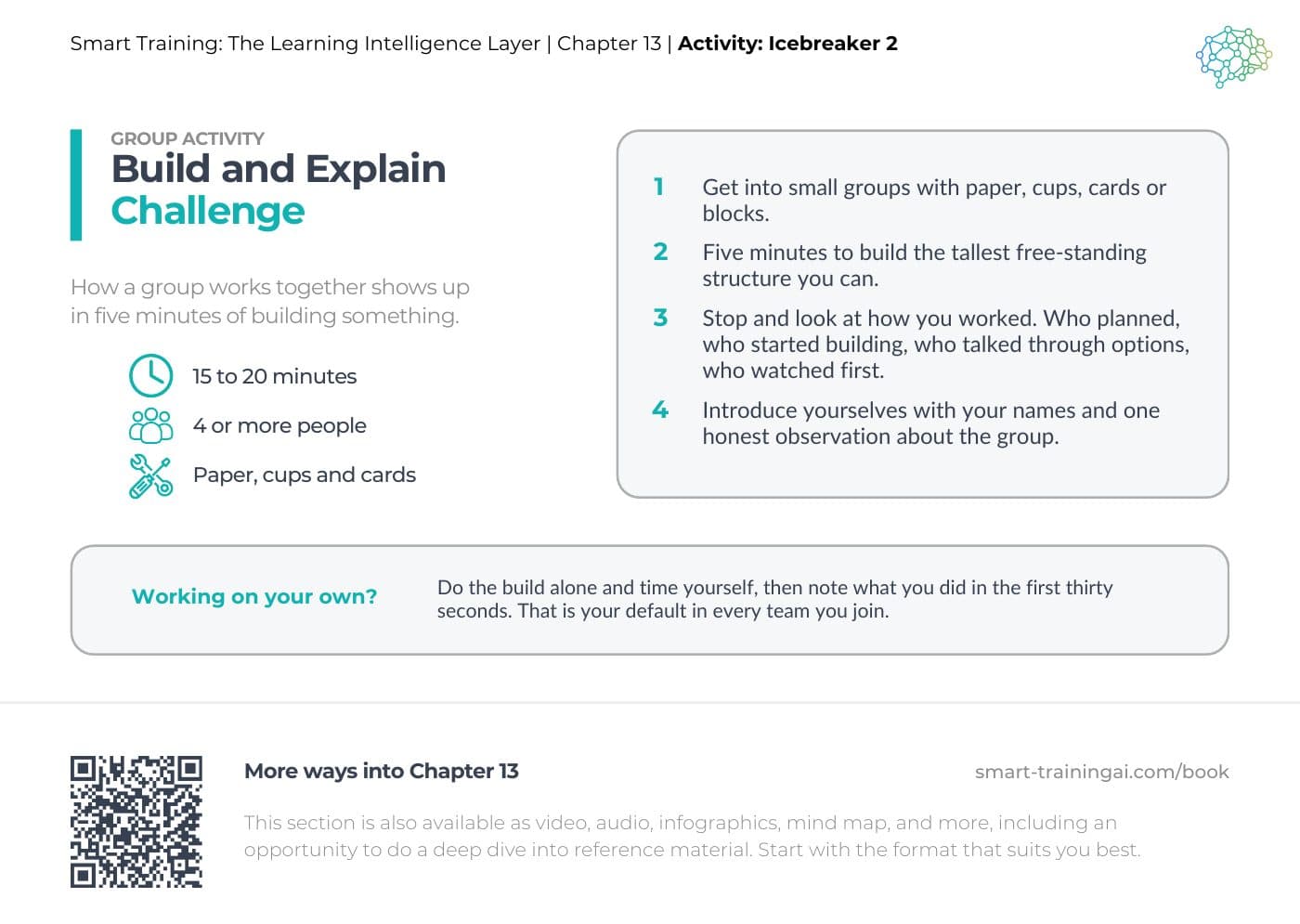
With a group (3)
On your own (3)
Go deeper
The research and writing behind Chapter 13.
- Amy Edmondson, WileyThe Fearless OrganizationThe case for psychological safety at work, which the chapter builds on.
- Google re:WorkUnderstand Team EffectivenessGoogle's Project Aristotle, which found psychological safety mattered most in its teams.
- Salas, Sims and Burke, Small Group Research, 2005Is There a "Big Five" in Teamwork?The core components of teamwork, and the shared mental models and trust that support them.
- Jon Katzenbach and Douglas Smith, Internet ArchiveThe Wisdom of TeamsThe classic argument that teams are the basic unit of performance in organisations.
- Karl Weick and Kathleen Sutcliffe, Internet ArchiveManaging the UnexpectedHow high-reliability organisations stay alert under pressure, behind the chapter's section on teams in crisis.
- Day, Fleenor, Atwater, Sturm and McKee, The Leadership Quarterly, 2014Advances in Leader and Leadership DevelopmentA review of 25 years of research on developing leaders, for the chapter's view of the team leader's role.