Equal input, unequal outcomes
A companion to Chapter 6 of the book, The Value of Personalised Learning. The same ideas in several forms: film, conversation, 2 infographics, a mind map and 6 activities. Start with whichever suits you.
Chapter 6 in two minutes
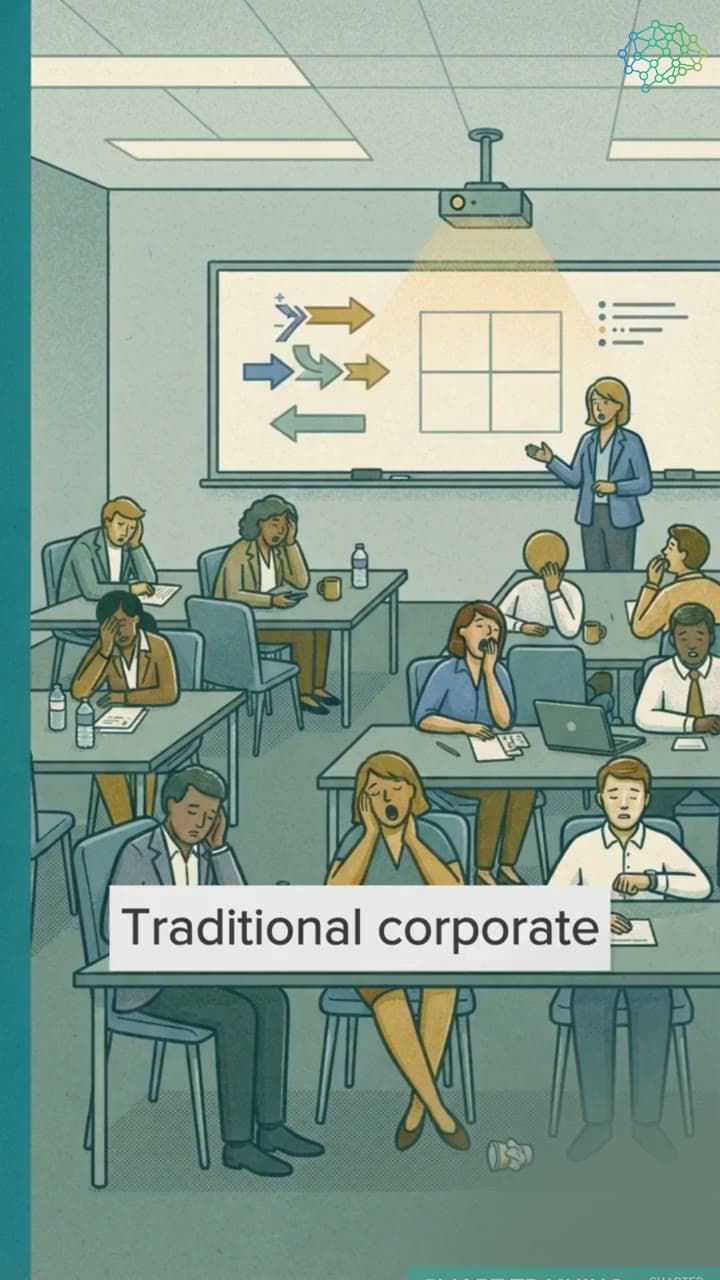
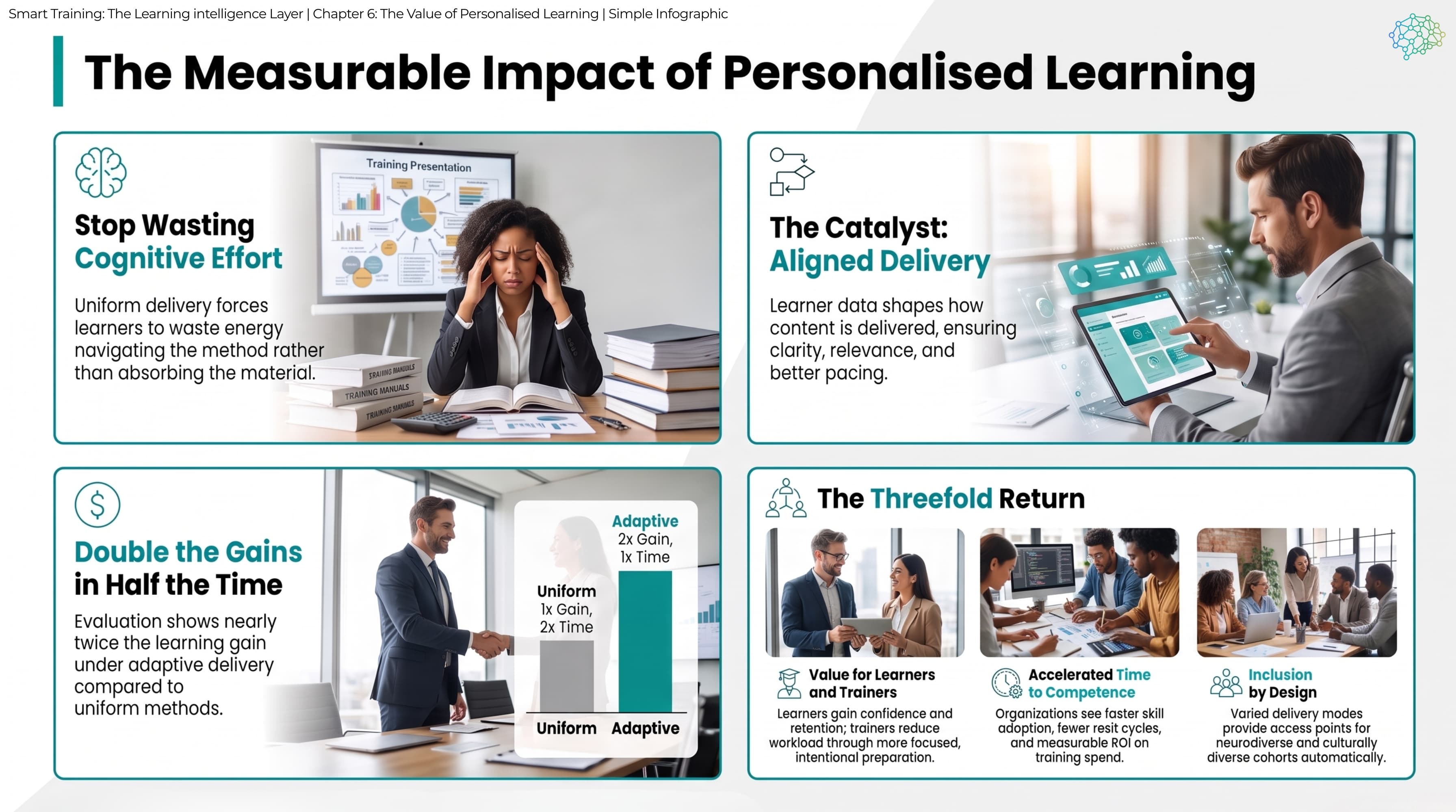
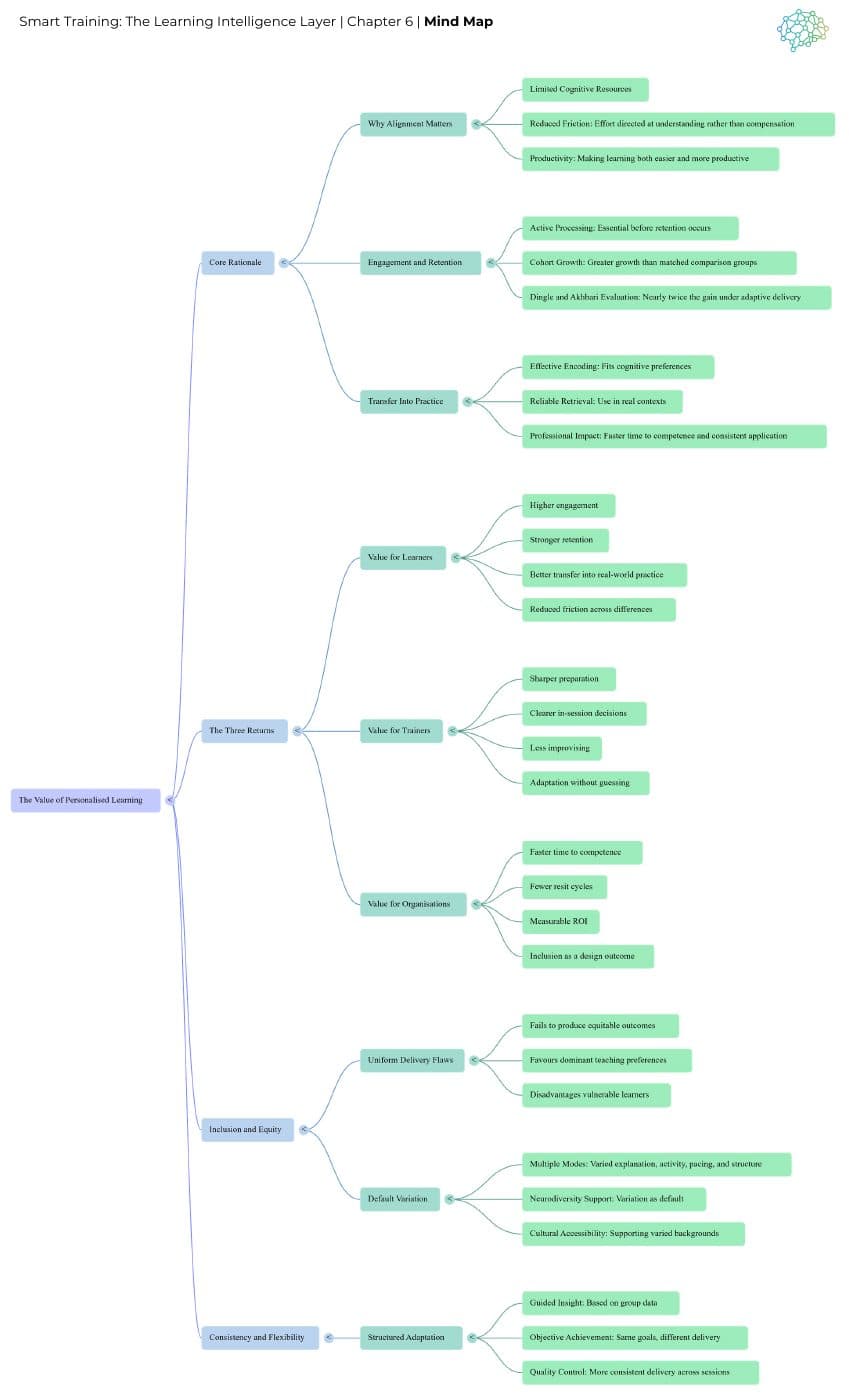
Uniform delivery creates cognitive friction. When the method does not fit, learners spend effort working around how the material is presented instead of engaging with the material itself. Chapter 6 argues that alignment matters because attention and working memory are limited, and that effort is better spent on understanding.
The chapter sets out three returns. Learners gain engagement, retention and confidence that carries into real work. Trainers prepare more sharply and improvise less. Organisations see faster time to competence, fewer resit cycles and a return on training spend they can measure. One evaluation it cites found nearly twice the learning gain under adaptive delivery.
It is also a question of fairness. Giving everyone the same session is equality of input, not equality of outcome. Making variation in explanation, activity and pace the default opens access for neurodiverse and culturally varied learners, while the objectives stay the same for everyone.
Equality of input is not equality of outcome.
Watch or listen
Prefer to take it in by eye or by ear? Both cover the core ideas of Chapter 6 in a few minutes.
Film, 1 min
The real ROI of personalised learning
What aligned delivery returns to learners, trainers and organisations, and why uniform sessions cost more than they appear to. Captions are built in.
Conversation, 6 min
Adapting corporate training to learning strengths
A conversation about cognitive friction, the three returns of personalisation, and why the same session does not give everyone the same chance.
Chapter 6 at a glance
A quick overview, then the full argument with the evidence. Select either one to see it full size.
How the ideas connect
Every idea in Chapter 6 on one page. Look at it before you read to see the shape of the argument, or afterwards as a recap.
Put it into practice
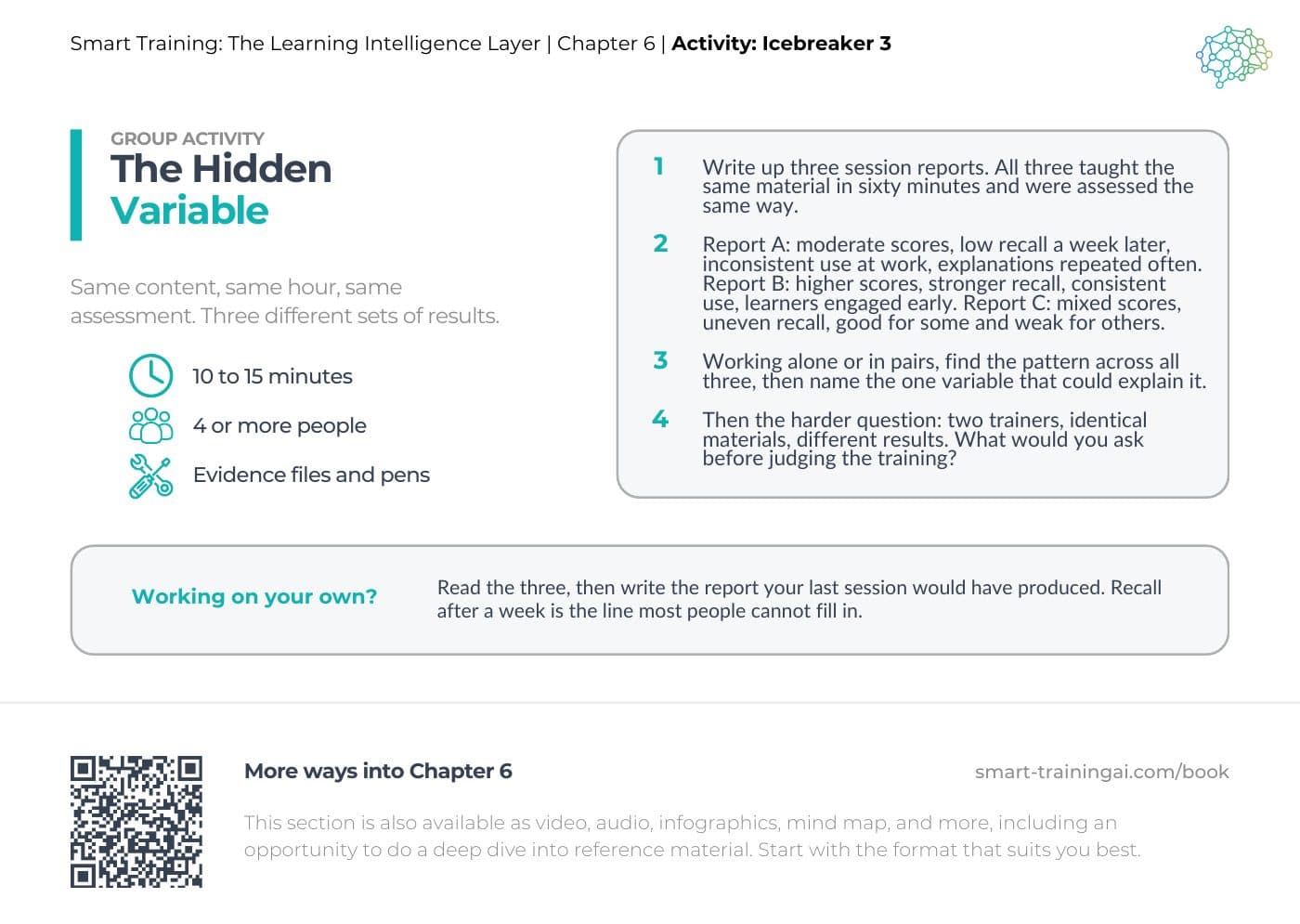
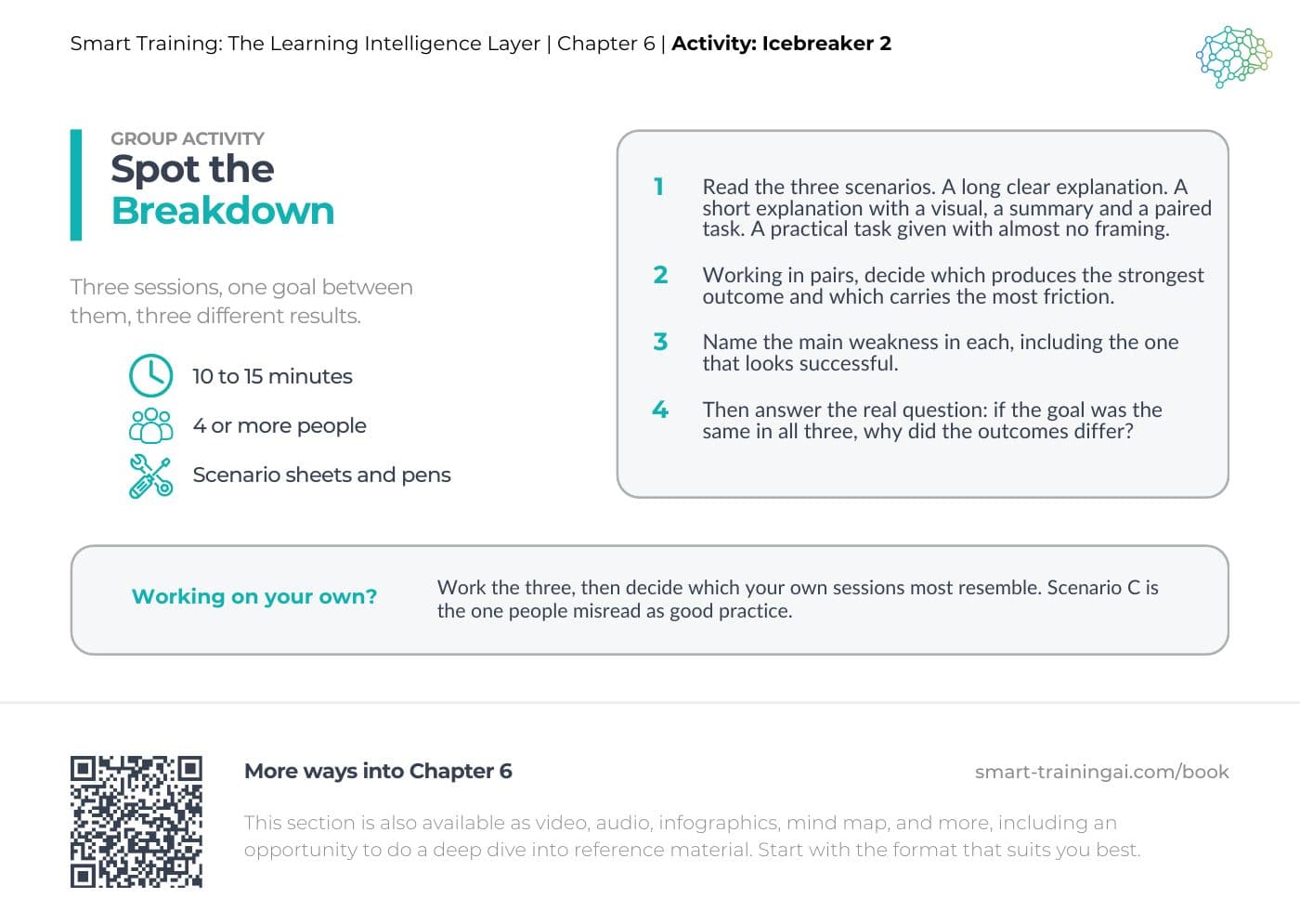
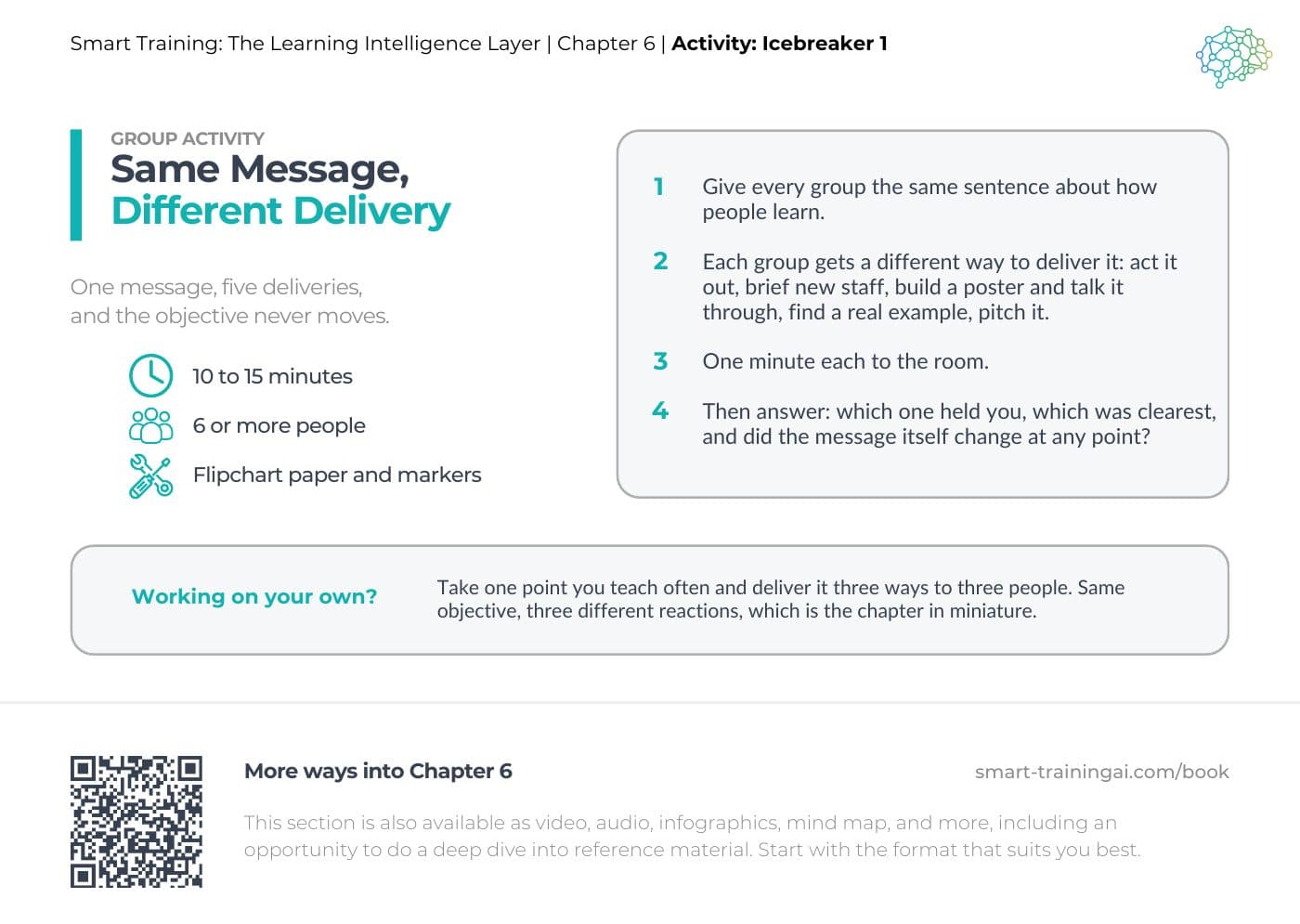
Short activities to run with a group or work through on your own. Each one has a printable card.
With a group (3)
On your own (3)
Go deeper
The research and writing behind Chapter 6.
- Salas et al., Psychological Science in the Public Interest, 2012The Science of Training and Development in Organizations: What Matters in PracticeA review of what the evidence says makes workplace training work, before, during and after the session.
- RAND CorporationContinued Progress: Promising Evidence on Personalized LearningA large study of schools using personalised learning, and what changed in their results.
- Sweller, Ayres and Kalyuga, SpringerCognitive Load TheoryWhy effort spent working around a poor format is effort taken away from learning.
- Thomas Armstrong, ASCDNeurodiversity in the ClassroomStrength-based strategies for making variation the default rather than the exception.