Teach the individual, not the room
A companion to Chapter 7 of the book, Teaching the Individual, Not the Room. The same ideas in several forms: film, conversation, 2 infographics, a mind map and 6 activities. Start with whichever suits you.
Chapter 7 in two minutes
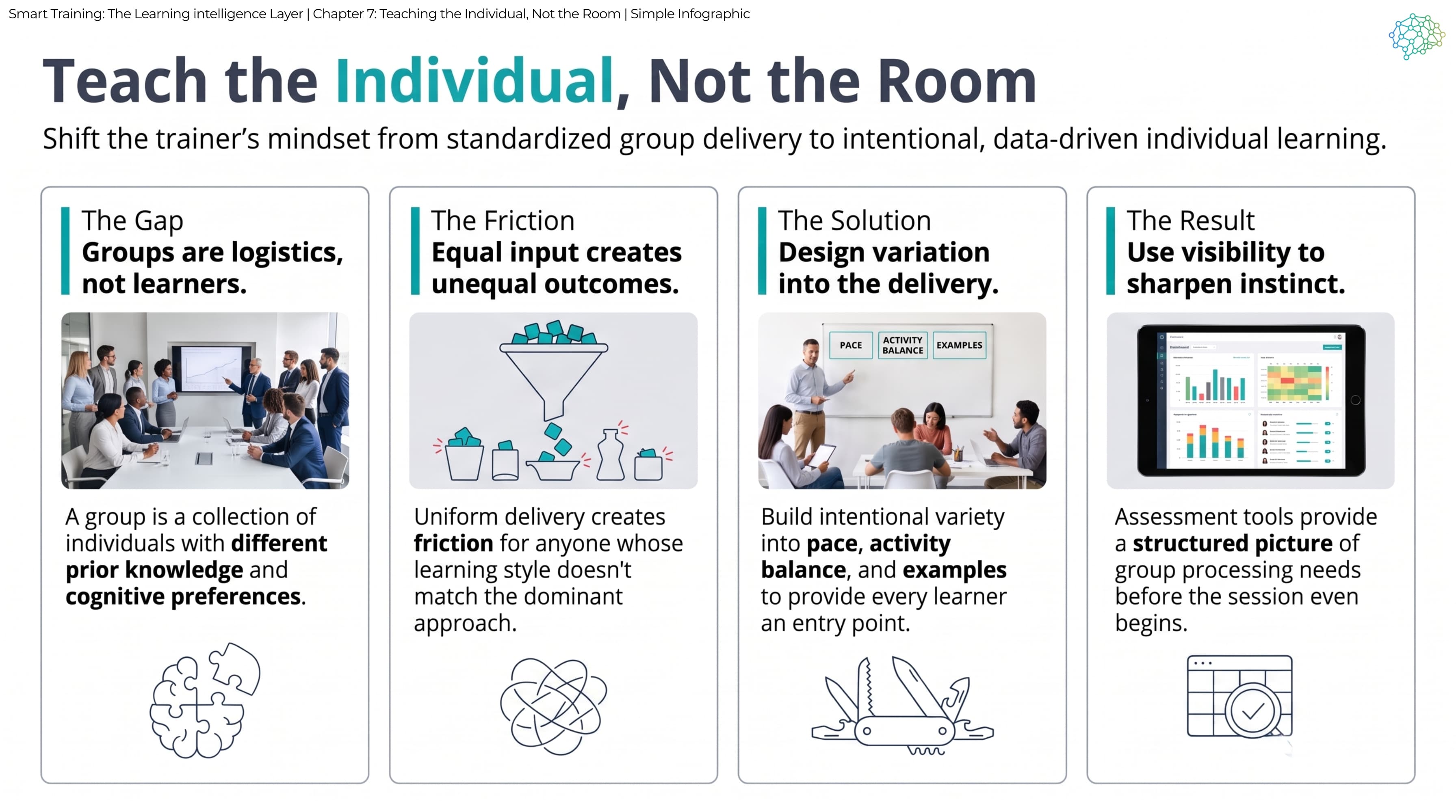
Groups exist for practical reasons: scale, cost and the value of shared discussion. But a group is a collection of individuals, not a single learner. Each person brings different prior knowledge and different preferences for how they take in ideas, and identical delivery suits some of them far better than others.
Chapter 7 argues that variation should be designed in from the start rather than improvised when disengagement shows. Deliberate changes to pace, activity balance and examples give more people a productive way in. Tools such as the Learning Strength Assessment give a structured picture of the group before the session, so the trainer's instinct has a baseline to work from.
None of this lowers the standard. Learning objectives stay the same for everyone; only the route to them changes. Consistency of outcome matters more than uniformity of method, and collective settings keep their value for discussion and shared problem solving. The design challenge is balancing support for each person with that shared experience.
A group is a collection of individuals, not a single cognitive entity.
Watch or listen
Prefer to take it in by eye or by ear? Both cover the core ideas of Chapter 7 in a few minutes.
Film, 2 min
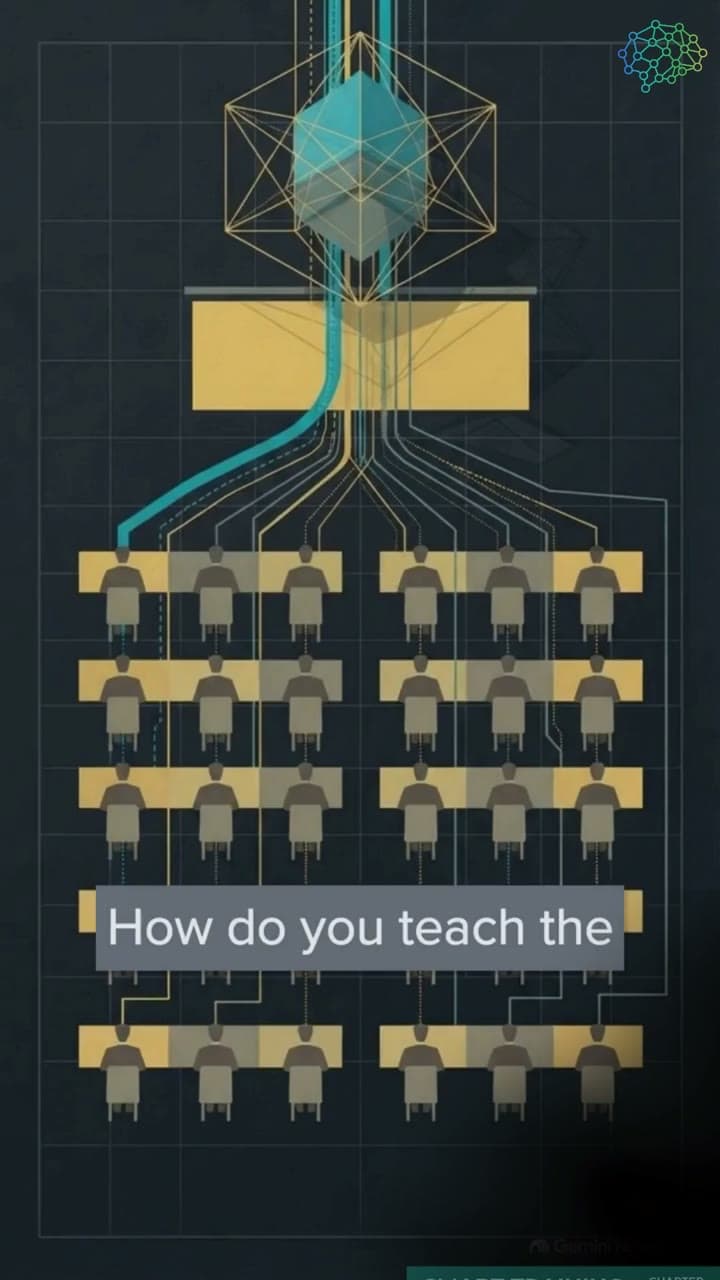
Teaching the individual, not the room
Why a group is not a learner, and how designing variation into a session gives more people a way in without changing the goal. Captions are built in.
Conversation, 6 min
Adapting training to individual cognitive strengths
A conversation about the equality fallacy, intentional rather than reactive adaptation, and keeping standards fixed while the route varies.
Chapter 7 at a glance
A quick overview, then the full argument with the evidence. Select either one to see it full size.
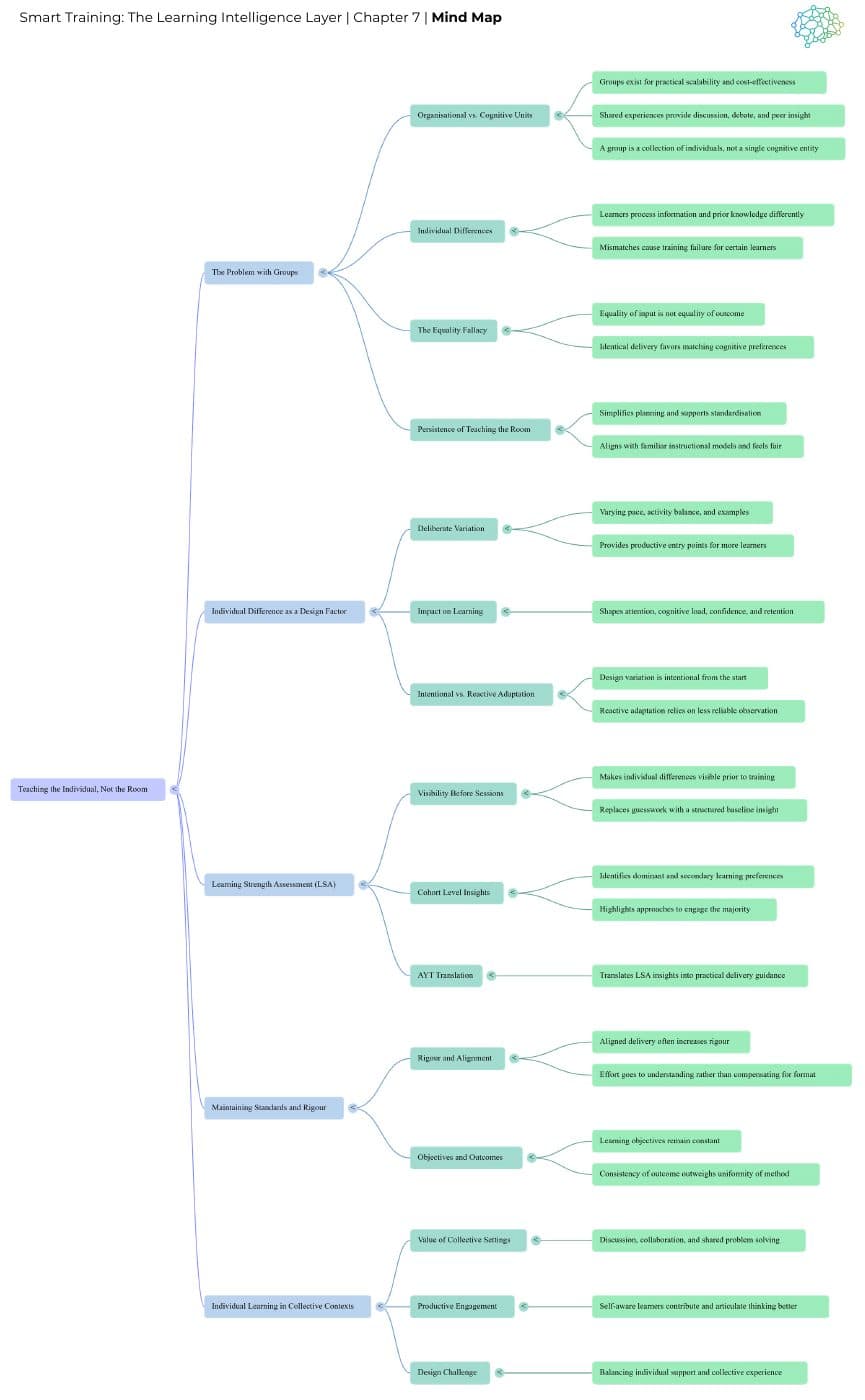
How the ideas connect
Every idea in Chapter 7 on one page. Look at it before you read to see the shape of the argument, or afterwards as a recap.
Put it into practice
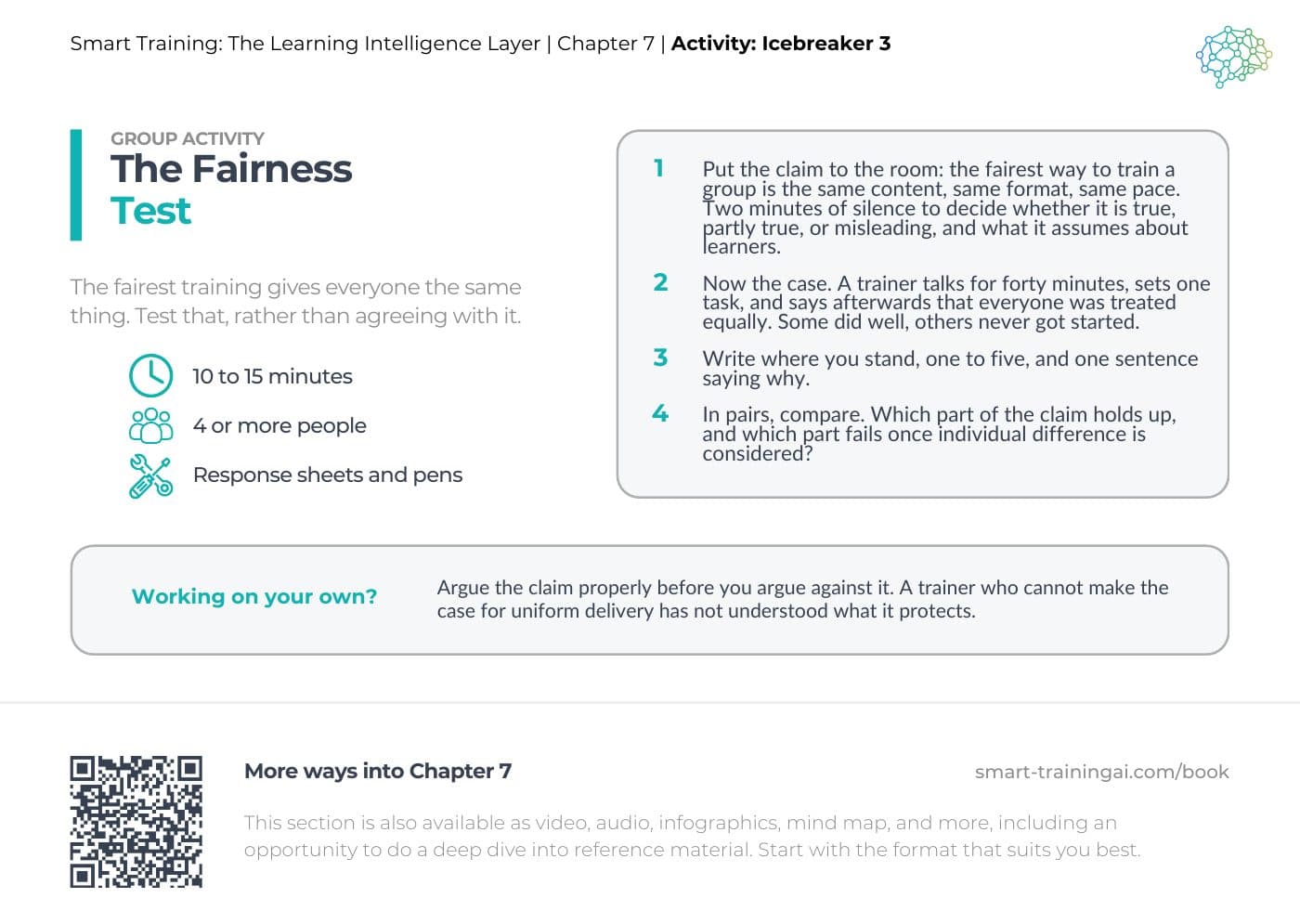
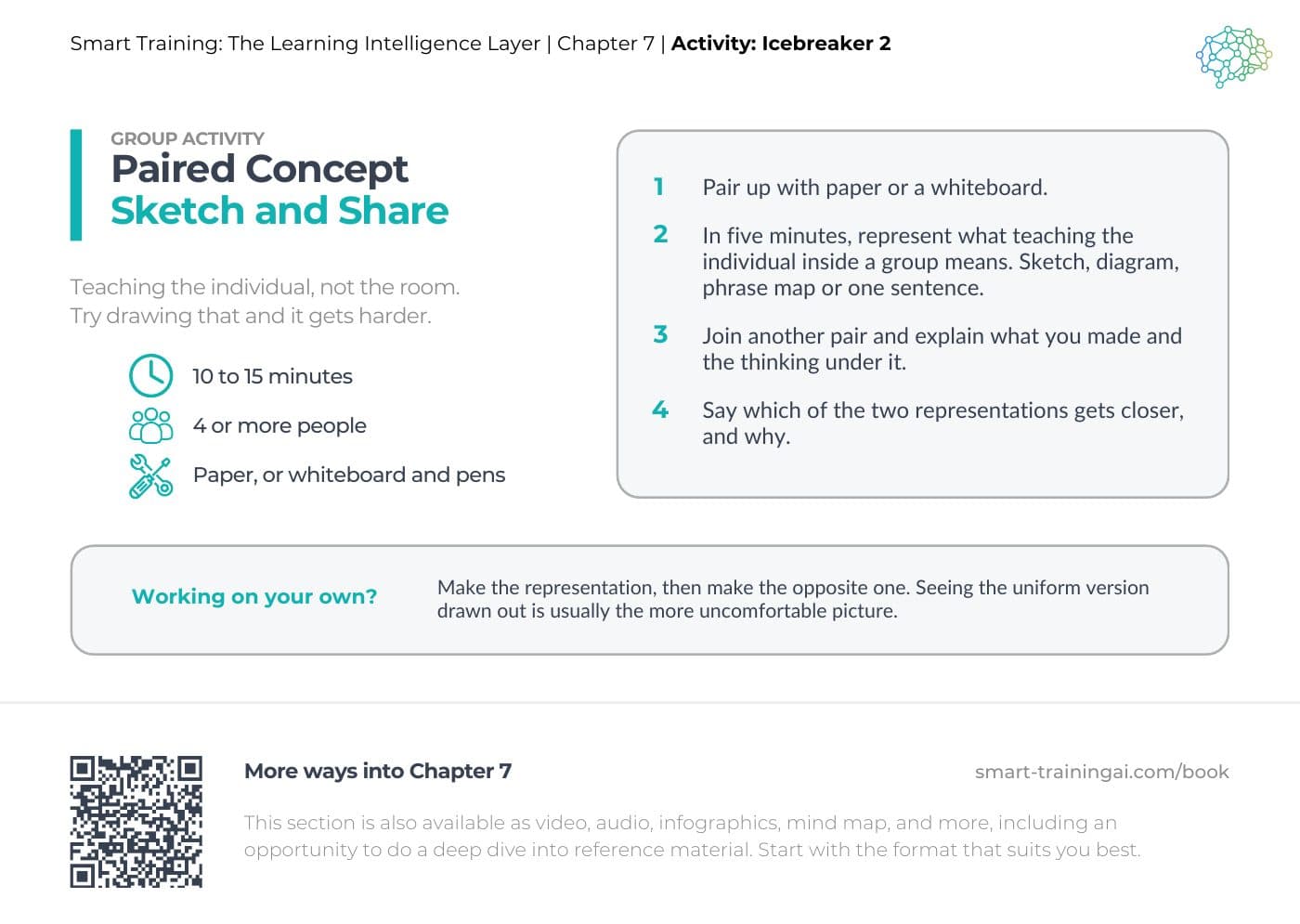
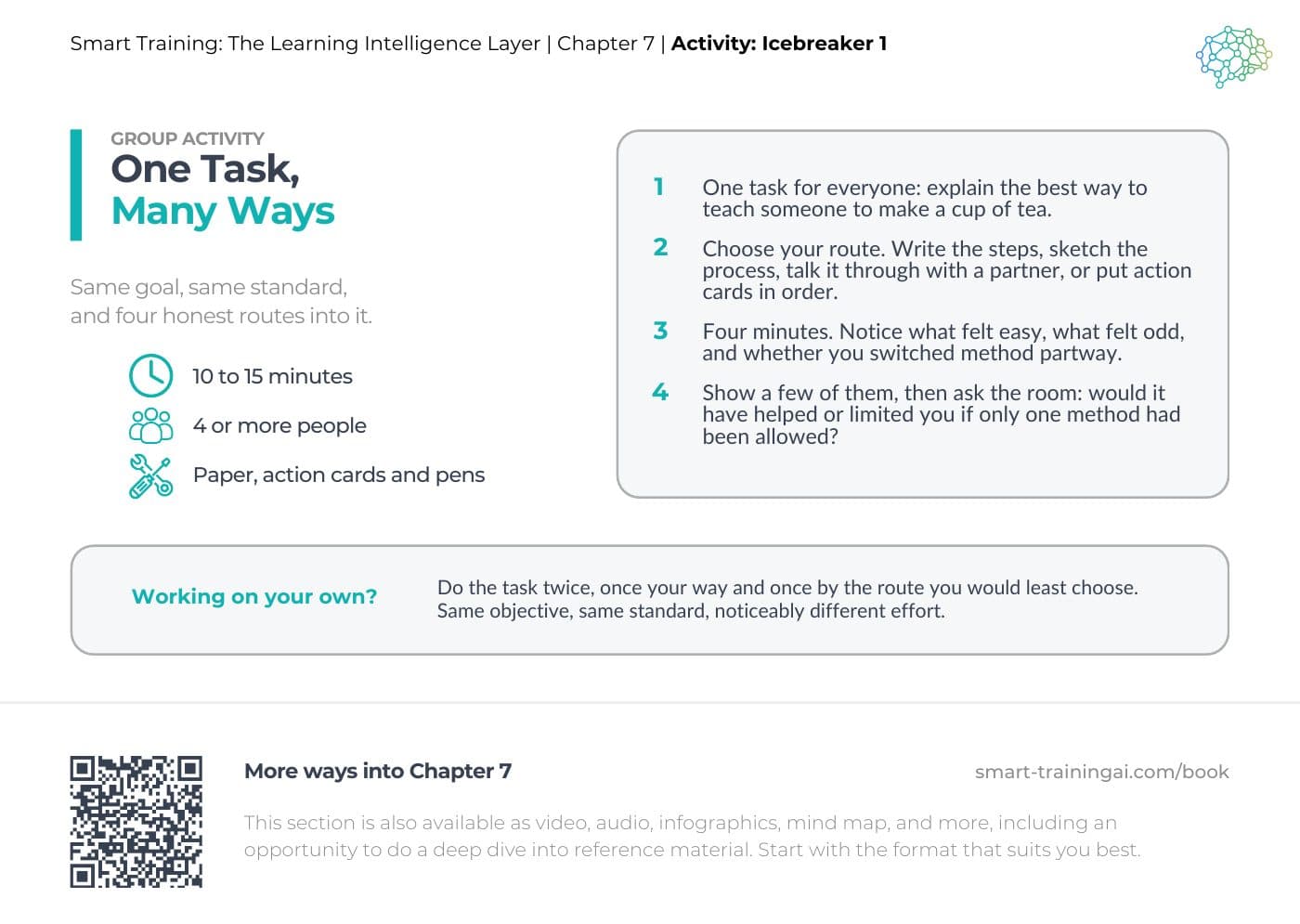
Short activities to run with a group or work through on your own. Each one has a printable card.
With a group (3)
On your own (3)
Go deeper
The research and writing behind Chapter 7.
- Carol Ann Tomlinson, ASCDThe Differentiated Classroom: Responding to the Needs of All LearnersThe standard guide to keeping goals the same while varying the route to them.
- Lev Vygotsky, Harvard University PressMind in SocietyWhy individual learning still happens best in a social setting, and the zone of proximal development.
- Carl Rogers, Internet ArchiveFreedom to LearnThe case for learner-centred teaching, from one of its founding voices.
- Sweller, Ayres and Kalyuga, SpringerCognitive Load TheoryHow the same material can be easy for one learner and overwhelming for another.